Getting older comes with a lot of adjustments, and hearing is one of the areas where change tends to be both common and gradual enough that people don’t always connect what they’re noticing to age. The condition has a name – presbycusis, or age-related hearing loss – and it affects roughly one in three adults over 65, making it one of the most widespread chronic conditions among older people. Knowing what to expect as it progresses can help you stay ahead of it rather than constantly playing catch-up. It’s also useful to know that the practical side of managing it has gotten a lot more straightforward. Things like hearing aid domes types are way less intimidating once you actually look into them, and with so many OTC hearing aids now on the market, finding something that works doesn’t have to mean a big medical undertaking.
Here’s what age-related hearing changes tend to look like in practice, and what’s worth knowing before they get ahead of you.
It Usually Starts With High-Pitched Sounds
Inside the inner ear, thousands of tiny hair cells are responsible for converting sound into signals the brain can read. Once these cells are damaged, they don’t come back — and the ones handling high-frequency sound are typically the first to go as we age.
What that looks like day-to-day is that high-pitched sounds start dropping out before lower ones do. Consonants like s, f, sh, and th — the sounds that make speech crisp and distinct — sit in that high-frequency range. So rather than sounds becoming uniformly quieter, words start to blur. People often describe it as everyone seeming to mumble, even in a quiet room.
The Progression Is Slow and Uneven
Age-related hearing loss doesn’t follow a single predictable path. For some people it stays relatively mild for decades. For others it moves faster, particularly with a history of noise exposure, certain medications, or conditions like diabetes or cardiovascular disease that reduce blood flow to the inner ear.
The one thing that’s pretty consistent is how slowly it tends to happen. There’s rarely a noticeable drop from one year to the next — instead, things that used to be manageable become gradually harder. Dinner party conversations, film dialogue without subtitles, hearing clearly across a conference table. The changes are small enough individually that it often takes years to recognize how much has shifted.
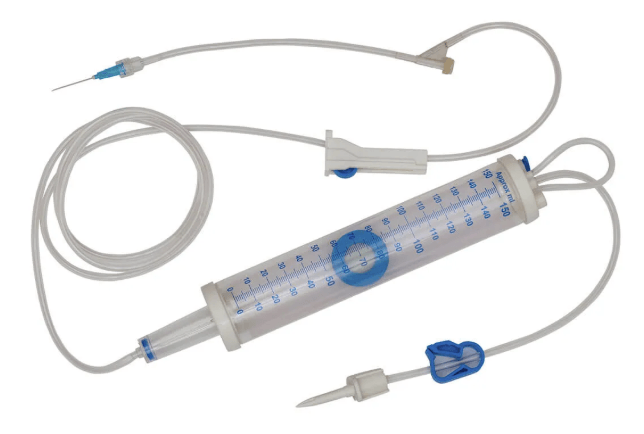
Read Also: Volumetric Chamber: Precision Fluid Measurement in IV Therapy
Background Noise Becomes a Real Problem
One of the more frustrating aspects of age-related hearing loss is what happens in noisy environments. A quiet one-on-one conversation might still feel mostly fine, but a busy restaurant or a crowded family gathering can become genuinely exhausting to navigate.
The reason is that hearing loss doesn’t just affect volume — it also weakens the brain’s ability to separate speech from competing sounds. When that filtering ability degrades, the brain works overtime to piece together what it’s missing, which is tiring. A lot of people find that social situations start to feel like hard work long before they’d describe their hearing as “bad.”
Tinnitus Often Shows Up Too
Not everyone with age-related hearing loss gets tinnitus, but the overlap is common enough that the two are closely associated. It shows up as a ringing, buzzing, or hissing that doesn’t have any external source – sometimes barely noticeable, sometimes persistent enough to interfere with sleep or concentration.
Worth knowing: hearing aids can actually take the edge off tinnitus for a lot of people. Bringing in more ambient sound gives the brain something real to process, and that tends to push the internal noise further into the background. It’s not a cure, but for many people it makes a meaningful difference.
Fit and Comfort Are More Important Than They Sound
First-time hearing aid buyers usually spend most of their energy comparing features and costs, which makes sense. But fit doesn’t get nearly enough attention, and it arguably matters just as much. A device that’s uncomfortable to wear won’t get worn — which makes it useless regardless of how good the specs are.
Dome type is a bigger factor here than most people expect going in. Open, closed, and power domes each suit different levels of hearing loss and different ear canal shapes, and the wrong choice affects both comfort and sound quality in ways that are immediately noticeable. It’s the kind of detail that’s easy to overlook but worth getting right from the start.
What a Realistic Approach Looks Like
Age-related hearing loss isn’t something you can reverse, but it’s very much something you can manage well. The people who tend to have the best outcomes are the ones who start paying attention before the effects become hard to ignore.
A baseline hearing test is a sensible starting point, followed by some honest reflection on the signs you’ve already been noticing. Modern OTC devices have taken a lot of the friction out of the next step – there’s no prescription needed, no lengthy referral process, and the cost is a fraction of what traditional hearing aids have run. Getting on top of it sooner is almost always easier than waiting to see how bad it gets.